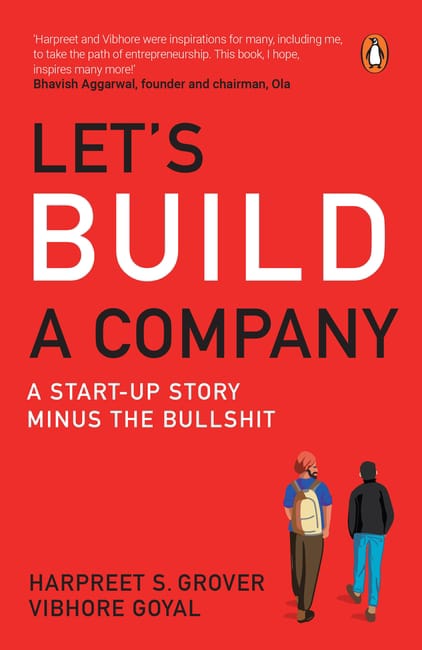
Harpreet’s journey into the world of business began long before he stepped onto a university campus. As a young boy, he was obsessed with comics. While his parents supported his hobby, Harpreet possessed an innate drive to make his passion self-sustaining. He started by swapping comics with a neighbor, but soon, the businessman within him took over. He began renting out his collection for Rs 1 a day. It was a modest start, but it provided him with his first real taste of revenue, customer demand, and asset management.
Vibhore sought a more hands on education. He took up a job at a local bike repairing garage.By getting his hands dirty and learning how to dismantle and fix engines, he developed a disciplined work ethic and a practical understanding of how complex systems operate.
The two finally crossed paths at IIT Bombay. Though they both started in the Civil Engineering department Vibhore eventually switched his branch to follow his evolving interests, but the bond between the two only strengthened. Harpreet taught him table tennis to build his confidence and agility. In return, Vibhore, possessing a sharp analytical mind tutored Harpreet in complex mathematical operations.After graduation, life took them in different directions. Vibhore landed a prestigious role at Microsoft’s Research Division, while Harpreet joined Inductis, a data analytics firm. However, the dream of building a company together never faded.The specific idea for their startup, CoCubes, was born out of a frustrating personal experience. While at Inductis, Harpreet’s uncle called him asking for help to secure an HR appointment for a student from a Tier-2 college. Harpreet facilitated the meeting, but nothing came of it. When Harpreet asked his HR manager why the candidate wasn't considered, the manager gave him a blunt reality check: “If I travel to a college 300 kilometers away and I can't find anyone to hire, I lose my job.”. He realized there was a massive, systemic gap between corporate recruiters and students in Tier-2 and Tier-3 colleges. The recruiters couldn't risk the time and money to visit remote campuses, and the students, regardless of their talent, remained invisible. However, when they began pitching their startup idea, they were met with skepticism. To build credibility, they returned to their roots, reaching out to their IIT batchmates and professors for testimonials and validation.They eventually managed to set up an office at the Ansal Institute of Technology. Their focus shifted to the lifeblood of any startup capital and mentorship.They were introduced to a mentor named Aman, who became advisor in their growth. Aman didn’t just offer encouragement; he helped them refine their business model and opened doors to corporate networks. When they finally received a term sheet for half a million dollars, Aman’s advice was practical and firm: "Get a lawyer to review this, but pay them only on an hourly basis to keep costs down."As the business grew, the duo adopted a strict discipline to protect their venture. They learned early on to avoid verbal agreements, insisting on written contracts to prevent future disputes. To maintain financial independence, they avoided credit cards and refused to borrow money from their parents, wanting to ensure the company stood on its own merits rather than family subsidies.
Through Kashyap, another mentor, they were introduced to Raghu Batta from Ojas. This relationship was a turning point. They began to understand the investors learning exactly what questions to expect and how to demonstrate market depth. They realized that while knowledge was the foundation, a company could not run on intellect alone it needed a repeatable, scalable sales process.
Their first breakthrough came when they signed Banda Singh Bahadur College for a fee of ₹10,000. It was a modest sum, but it proved the model worked. Since there were no comparable products on the market, they began experimenting with pricing strategies.
To add value, they moved beyond mere connections and started offering comprehensive services. They introduced:
Benchmarking: Tools to help students see where they stood compared to their peers nationwide.
Skill Enhancement: Embedded English learning software to fix the communication gap often found in Tier-2 colleges.
Video Profiles: They shot videos of students so HR managers could assess soft skills remotely, saving time and travel costs.
Corporate Portals: Dedicated engagement pages where companies could post their hiring status, creating a transparent ecosystem.
To ensure the integrity of their marketplace, they intentionally separated their internal teams. The Supply Side and Demand Side operated independently so that neither side could unfairly influence the other, ensuring that only the best fit candidates were matched with the right jobs.
Despite the pressures of scaling a business, Harpreet and Vibhore never sacrificed their core values. They remained deeply committed to their families, viewing their entrepreneurial success as a way to honor the support they received growing up. My biggest takeaway is that they have shared the rules of hiring .As we spend too much money on making a office it is a real waste also not to hire people who was not hungry is a also real waste. It is better to seek advice when needed can help to the growth of the company.Their persistence paid off. CoCubes became a leader in the assessment and hiring space In 2016, they successfully sold the company in an all cash deal to Aon Hewitt.
I like this book because it shares the real-life experiences of entrepreneurs while building a company. The authors explain the practical challenges they faced during their startup journey. One important lesson from the book is that business problems should not be carried into personal life. It is essential to maintain a balance between work and family and give equal importance to both.
The book also highlights that disputes and disagreements can occur while running a company. Many factors such as decision making, responsibilities, and financial pressures can lead to conflicts among team members. In addition, gaining the trust of investors is very important for a startup. Investors need to believe in the vision, commitment, and potential of the founders before they decide to support the business.
Overall, the book provides valuable insights into entrepreneurship, teamwork, and maintaining a healthy work life balance while building a successful company.